Quick Answer: Best Offshore Jurisdictions for Forex Brokers in 2026
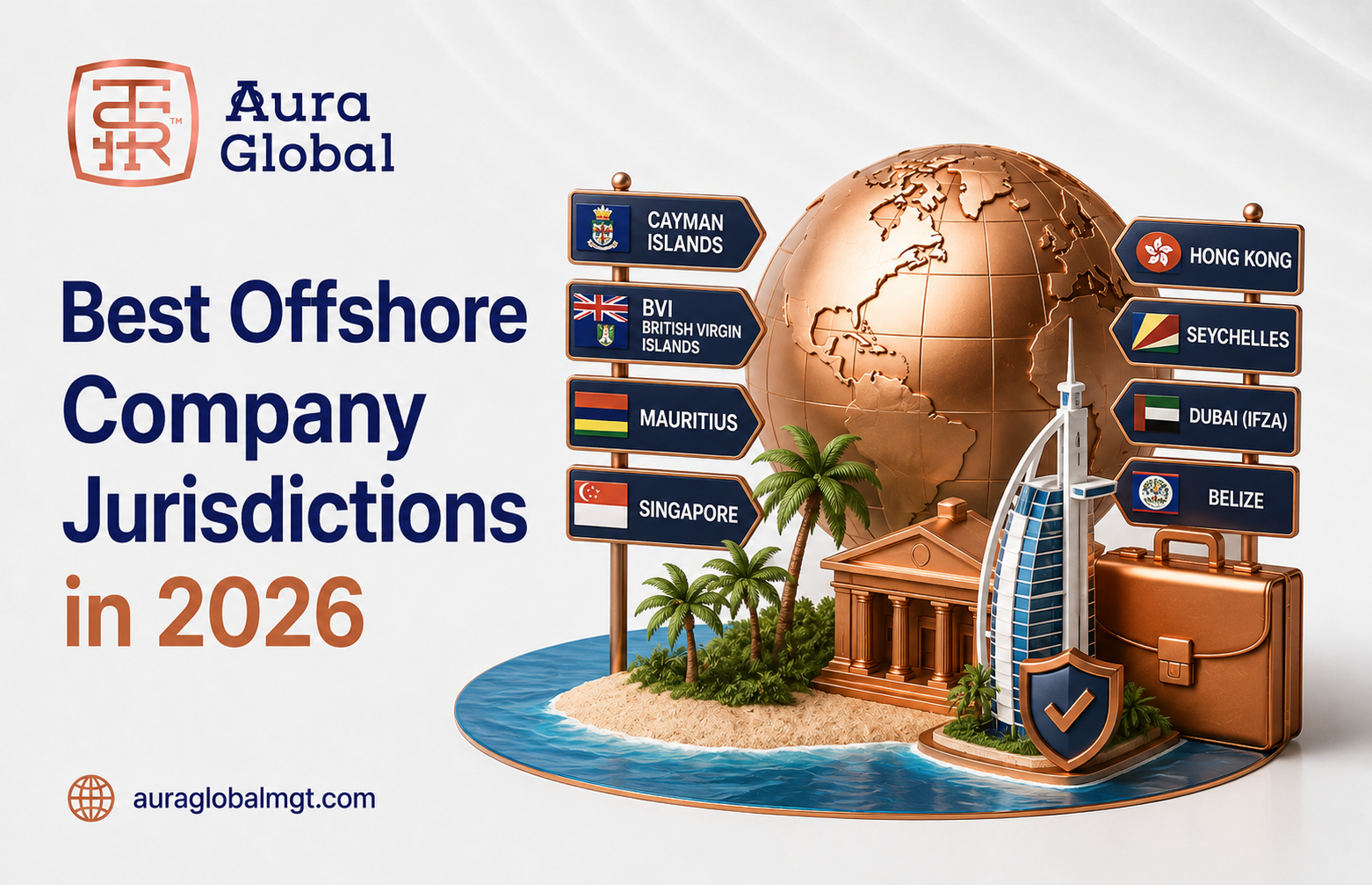
- Mauritius—Top-ranked for Investment Dealer License & GBC structures
- Seychelles – Low-cost, fast forex licensing (SIB License)
- Vanuatu – Budget-friendly, quick setup for retail forex brokers
- Cayman Islands – Preferred for institutional-grade fund structures
- BVI – Popular for holding companies and payment aggregators
Among these, Mauritius consistently ranks #1 for regulatory credibility, tax efficiency, and access to African & Asian markets—making the Mauritius Forex Broker License the most strategically valuable choice for serious operators in 2026.
The Offshore Jurisdiction Decision That Shapes Your Business
Choosing the right offshore jurisdiction is not just a legal checkbox — it’s the single most strategic decision you’ll make as an international entrepreneur or forex broker in 2026. Get it right, and you unlock lower taxes, global market access, and institutional credibility. Get it wrong, and you’re stuck with compliance nightmares and banking rejections.
Thousands of entrepreneurs ask the same question every year: “Where should I set up my offshore company?” The answer has never been one-size-fits-all. But in 2026, one jurisdiction keeps rising above the noise for forex businesses and global entrepreneurs alike — Mauritius.
This guide gives you an honest, no-fluff breakdown of the best offshore company jurisdictions available today, with a special deep-dive into the Mauritius Forex License and why it’s becoming the gold standard for forex licensing globally.
What Is an Offshore Company Jurisdiction? (And Why It Matters)
An offshore jurisdiction is simply a country or territory that offers foreign-owned businesses favorable conditions — think low or zero corporate taxes, simplified regulation, and streamlined company formation. But here’s what most guides don’t tell you:
Not all offshore jurisdictions are equal. And not all of them work for your specific business model.
Definition: An offshore company jurisdiction is a regulatory environment designed to attract foreign investment through tax incentives, business-friendly laws, and international treaty networks — allowing companies to operate globally while being incorporated in a low-tax or zero-tax territory.
For forex brokers, the jurisdiction directly determines:
- Which markets you can legally accept clients from
- How credible your license appears to institutional partners and banks
- Your corporate tax rate and treaty access
- The speed and cost of your licensing process
Top Offshore Company Jurisdictions in 2026: A Comparative Overview
Let’s look at the major players. We’ll go beyond the basics and give you the real picture for each.
1. Mauritius — The Strategic Powerhouse for Forex Licensing
Mauritius has quietly transformed into one of the world’s most respected financial centres — and in 2026, it’s leading the pack for forex broker licensing. Here’s why:
| Regulator | Financial Services Commission (FSC) |
| Primary License | Investment Dealer License (Forex Broker Category) |
| Corporate Structure | Global Business Company (GBC) |
| Corporate Tax Rate | 15% (with extensive treaty benefits) |
| Double Tax Treaties | 46+ countries including India, China, UAE, France, UK |
| FATF Status | White-listed — fully compliant |
| Time to License | Approximately 3–6 months |
| Minimum Capital | USD 225,000 for full Investment Dealer License |
| Language | English (official) |
| Currency | Mauritian Rupee (MUR) — USD/EUR widely accepted in business |
What truly sets Mauritius apart is the combination of regulatory credibility, strategic location, and tax treaty access. The Mauritius Investment Dealer License is recognized by prime brokers, liquidity providers, and institutional partners globally. Unlike licenses from Vanuatu or Seychelles, a Mauritius Forex License signals that you’ve passed real regulatory scrutiny.
For entrepreneurs targeting Africa, India, or the Middle East, the Mauritius Global Business Company structure offers unmatched access through its treaty network. You’re not just offshore — you’re strategically positioned.
2. Seychelles — Fast Setup, Budget-Friendly Entry
Seychelles is popular for its low cost and fast incorporation timeline. The Seychelles Financial Services Authority (FSA) issues Securities Dealer Licenses for forex brokers. However, Seychelles lacks the treaty network and regulatory depth of Mauritius, which makes it harder to open tier-1 bank accounts or attract institutional clients.
Best for: Start-up brokers testing the waters with a smaller client base, or operators building towards a higher-tier license.
3. Vanuatu — The Budget Forex License
Vanuatu offers one of the most affordable forex broker licenses globally through the Vanuatu Financial Services Commission (VFSC). License fees are low, minimum capital requirements are minimal, and setup can happen in as little as 30–60 days.
The tradeoff? Vanuatu licenses are often rejected by major liquidity providers and banks. For a broker planning serious scale, a Vanuatu license is a starting point — not a long-term strategy.
4. Cayman Islands — The Gold Standard for Funds
The Cayman Islands is not typically for retail forex brokers — it’s the jurisdiction of choice for hedge funds, institutional investors, and asset managers. The regulatory environment is robust, costs are high, and setup is complex. But if you’re building a fund structure or targeting ultra-high-net-worth clients, Cayman is hard to beat.
5. British Virgin Islands (BVI) — The Holding Company Classic
BVI is a top choice for holding companies, parent entities, and payment structures. Many forex groups use a BVI holdco above their Mauritius or Seychelles operating entity. BVI itself does not issue forex licenses but remains extremely useful within a multi-jurisdiction corporate structure.
Deep Dive: The Mauritius Forex Broker License in 2026
Let’s get into the details of the license that’s reshaping how entrepreneurs approach forex licensing jurisdictions globally.
What Is the Mauritius Investment Dealer License?
The Investment Dealer License in Mauritius is issued by the Financial Services Commission (FSC) under the Securities Act 2005. It authorizes companies to deal in securities — including forex, CFDs, and other financial instruments — on behalf of clients.
There are three categories of the Investment Dealer License:
- Full Service Dealer (including underwriting) — the highest tier
- Full Service Dealer (excluding underwriting) — most common for forex brokers
- Discount Broker — for execution-only models
For forex and CFD brokers, the Full Service Dealer (excluding underwriting) is the standard route under the Mauritius brokerage license framework.
The Global Business Company (GBC) — Your Operating Structure
To hold a Mauritius Forex License, your entity must be structured as a Global Business Company (GBC). This is the corporate vehicle that enables you to:
- Access Mauritius’s double tax treaty network (46+ countries)
- Pay a flat 15% corporate tax rate (with foreign tax credits often reducing this further)
- Operate internationally from a credible, well-regulated jurisdiction
- Open accounts with international banks and prime brokers
The GBC requires a registered office, a local management company, at least two locally-resident directors, and a substance presence in Mauritius. This is not a shell company—and that’s exactly the point. Substance requirements are what give the Mauritius Global Business Company its credibility.
Mauritius Forex License Requirements — What You Actually Need
Here is a practical breakdown of the Mauritius forex license requirements for the Investment Dealer License:
| Minimum Capital (Net Assets) | USD 225,000 (Full Service Dealer) |
| Directors | Minimum 2 directors; at least 2 must be Mauritius residents |
| Shareholders | No minimum local shareholding requirement |
| Compliance Officer | Mandatory — must be resident in Mauritius |
| AML/CFT Program | Mandatory — comprehensive policy required |
| Physical Presence | Registered office + substance (not just a mailbox) |
| Audited Accounts | Required annually |
| Management Company | Must appoint a licensed Management Company in Mauritius |
| Professional Indemnity | Recommended; required for some categories |
| Annual FSC Fee | Approximately USD 3,000–5,000 depending on category |
Mauritius Forex License Application Process — Step by Step
The Mauritius forex license application process involves two regulatory phases, both of which Aura Global can guide you through end-to-end:
- Phase 1 — Company Incorporation – Reserve your company name and incorporate your GBC with the Registrar of Companies (ROC). This includes preparing the constitution, shareholders’ agreement, and KYC documentation for all directors and beneficial owners.
- Phase 2 — FSC License Application – Submit your license application to the Financial Services Commission. This includes your business plan, compliance manuals, AML/CFT policies, capital proof, and management team profiles.
- Due Diligence & Queries – The FSC will review your application and may raise queries. A well-prepared application (backed by experienced advisors) significantly reduces back-and-forth time.
- License Approval & Commencement – Upon approval, receive your Investment Dealer License. Open corporate bank accounts and commence operations.
- Ongoing Compliance – Maintain annual audits, submit FSC annual returns, and ensure continuous compliance with AML/CFT obligations.
Why Mauritius Wins the 2026 Forex Licensing Race
- FATF white-listed: No grey-list stigma — your license carries real international weight
- 46+ double tax treaties: Essential for brokers serving Indian, UAE, and African clients
- Tier-1 banking access: GBC entities can bank with HSBC, Barclays, and other majors
- Strategic time zone: GMT+4 — bridges Asia-Pacific and European trading hours
- Skilled English-speaking workforce: Easy to find compliance, legal, and operational talent
- Competitive processing: FSC has streamlined timelines for well-prepared applications
Expert Tips: Choosing the Right Jurisdiction for Your Business
Before you pick a jurisdiction based purely on cost, consider these factors — they’re the ones that actually determine long-term success:
- Define your target markets first. A broker targeting Indian retail clients should be in Mauritius (treaty access). One targeting Southeast Asia may look at Labuan. Jurisdiction selection follows market strategy, not the other way around.
- Check your liquidity providers. Most Tier-1 LPs (like Integral, IS Prime) have whitelists of accepted jurisdictions. A Vanuatu license may be rejected outright — a Mauritius Investment Dealer License rarely is.
- Plan your banking early. A license without a bank account is useless. Mauritius-licensed GBCs have the strongest banking profile of any mid-tier offshore jurisdiction.
- Think about the long game. A USD 10,000 Seychelles license that you outgrow in 18 months costs more in the long run than getting the right structure from the start.
- Work with specialists. The Mauritius forex license application process has nuances. Working with an experienced financial services advisor like Aura Global reduces timelines and rejection risk significantly.
Risks to Consider Before Going Offshore
Offshore is not a shortcut. Here are honest risks you need to understand:
- Substance requirements are real. Post-BEPS (Base Erosion and Profit Shifting) reforms mean you can’t just have a mailbox offshore. Mauritius requires genuine economic substance — resident directors, local staff, and real decision-making on the island.
- Banking is the bottleneck. Opening a corporate bank account for a forex company takes time and documentation. Choose a jurisdiction with strong banking relationships — Mauritius scores highest here among mid-tier jurisdictions.
- Regulatory updates happen. The FSC updates its rules regularly. An advisor who stays current with Mauritius forex license requirements is worth every dollar.
- Grey-list risk is real. Avoid jurisdictions that are FATF grey-listed (e.g., some years this has included jurisdictions in the Pacific). A grey-listed jurisdiction can trigger correspondent banking restrictions and LP rejections.
Frequently Asked Questions (FAQs)
Q1: What is the Mauritius Forex Broker License and who needs it?
The Mauritius Forex Broker License — officially the Investment Dealer License issued by the FSC — is required by any company wishing to legally offer forex, CFD, or securities trading services to clients under a Mauritius-regulated entity. It is ideal for forex brokers, prop trading firms, and fintech companies seeking a credible, treaty-backed regulatory home.
Q2: How long does the Mauritius forex license application process take?
From company incorporation to receiving your Investment Dealer License, the Mauritius forex license application process typically takes 3 to 6 months. The timeline depends heavily on the completeness of your application, the complexity of your structure, and the FSC’s review queue. A well-prepared application handled by an experienced advisor like Aura Global can significantly reduce delays.
Q3: What are the minimum capital requirements for a Mauritius Forex License?
The minimum net assets (paid-up capital) required for a Full Service Dealer Investment Dealer License in Mauritius is USD 225,000. This must be maintained as a going-concern requirement throughout the life of the license, not just at application stage. Some lower-tier categories have different thresholds — your advisor will help you identify the right category.
Q4: Can I use a Global Business Company (GBC) to access India’s tax treaty with Mauritius?
Yes — the Mauritius-India DTAA (Double Tax Avoidance Agreement) is one of the most widely used treaties in the GBC’s network. However, the India-Mauritius treaty was amended in 2016 and capital gains on Indian equities are now taxable in India after April 2017. For forex operations (as opposed to equity investment), the GBC structure still offers significant treaty benefits and is widely used by brokers serving Indian traders.
Q5: Is Mauritius on the FATF grey list?
No. As of 2026, Mauritius is a FATF white-listed jurisdiction. It was placed on the grey list in 2020 and successfully exited in October 2021 after implementing comprehensive AML/CFT reforms. This is a critical distinction — it means Mauritius-licensed entities face no correspondent banking restrictions tied to grey-list status, unlike some competing jurisdictions.
Q6: What is the difference between a GBC and an Authorised Company in Mauritius?
A Global Business Company (GBC) is designed for entities that conduct business internationally and want access to Mauritius’s treaty network and FSC licensing. An Authorised Company (AC) is simpler, cheaper, and designed for companies that do NOT conduct business in Mauritius with Mauritius residents — but it cannot hold an FSC license like the Investment Dealer License. For forex brokers, the GBC is the mandatory structure.
Q7: How does the Mauritius brokerage license compare to a Seychelles forex license?
The Mauritius brokerage license (Investment Dealer License) is considerably more robust, credible, and internationally recognized than a Seychelles forex license. Mauritius is FATF white-listed, has 46+ tax treaties, and is accepted by most tier-1 liquidity providers and banks. Seychelles is lower cost and faster to set up but comes with significantly less institutional acceptance. For brokers serious about growth, Mauritius is the clear choice.
Conclusion: Make the Strategic Move — Not Just the Cheap One
The offshore jurisdiction you choose in 2026 will define your brokerage’s trajectory for years. A budget license from a low-credibility jurisdiction might save you money upfront — but it will cost you clients, banking relationships, and liquidity provider access down the road.
Mauritius isn’t the cheapest option. But it’s the smartest one for forex brokers and international entrepreneurs who are serious about building a legitimate, scalable global business. The Mauritius Forex Broker License — backed by the FSC, supported by 46+ tax treaties, and structured through a Global Business Company — gives you everything you need to compete with the best in the world.
Whether you’re starting fresh or upgrading from an existing license, the Mauritius Investment Dealer License is the gold standard for forex licensing jurisdictions in 2026. And the brokerage license in Mauritius application process, while thorough, is navigable with the right partner.