Your Gateway to International Banking
Opening a business bank account for an offshore company can feel like navigating a maze. Between regulatory requirements, documentation, and jurisdictional complexity, many entrepreneurs feel overwhelmed before they even start.
Here’s the truth: it’s absolutely doable, and with the right guidance, you can have your offshore company bank account operational in weeks, not months.
Whether you’re expanding your business globally, optimizing your offshore company tax structure, or establishing a presence in markets like Mauritius, Indonesia, or Malaysia, having a dedicated offshore business bank account is non-negotiable. It separates your business funds from personal finances, adds legitimacy to your offshore company formation, and simplifies accounting for international operations.
This guide walks you through every step, demystifies the process, and gives you the insider knowledge you need to succeed.
What Is an Offshore Business Bank Account? (Definition & Context)
An offshore business bank account is a bank account opened for your company in a jurisdiction outside your country of residence or primary business location. Unlike personal offshore accounts, these are specifically designed for business operations.
Key characteristics:
- Opened in your company’s name (not personal)
- Located in offshore financial centers like Mauritius, Singapore, or UAE
- Designed for legitimate business transactions and cash flow management
- Subject to international banking regulations (FATCA, CRS, AML/KYC)
The distinction matters: Opening an offshore business bank account is completely legal when done transparently. It’s about strategic business management, not tax evasion. Regulatory bodies worldwide now require full disclosure and compliance with anti-money laundering standards.
Many entrepreneurs confuse offshore company setup with something illicit. In reality, legitimate offshore company formation by consultants and offshore business solutions providers has become mainstream—especially for entities operating across Indonesia, Malaysia, and Middle Eastern markets.
Why Open an Offshore Business Bank Account? (Benefits & Strategic Advantages)
1. Currency Flexibility & Foreign Exchange Optimization
Operating across multiple countries means handling multiple currencies. An offshore business bank account lets you receive payments in USD, EUR, GBP, AED, and other currencies without constant conversion fees. This directly impacts your bottom line.
2. Simplified International Operations
Your offshore company operates across borders. A dedicated business bank account streamlines cash flow, invoicing, and expense tracking. You’re not shuffling money between personal and business accounts or juggling multiple domestic banks.
3. Enhanced Business Credibility
Clients and partners feel more confident working with companies that have legitimate banking infrastructure. A Mauritius offshore company with a professional bank account signals stability and compliance.
4. Tax Planning Opportunities
While not tax evasion, strategic offshore tax planning through legitimate structures can optimize your liability. Offshore company setup providers work with tax professionals to ensure your banking aligns with legal tax minimization strategies.
5. Asset Protection
An offshore business bank account separates company assets from personal liability, crucial for entrepreneurs managing risk across jurisdictions.
6. Regulatory Compliance
Some jurisdictions and clients require vendors to have accounts in specific regions. An offshore business bank account opens doors that domestic accounts might not.
Step-by-Step Guide: Opening Your Offshore Business Bank Account
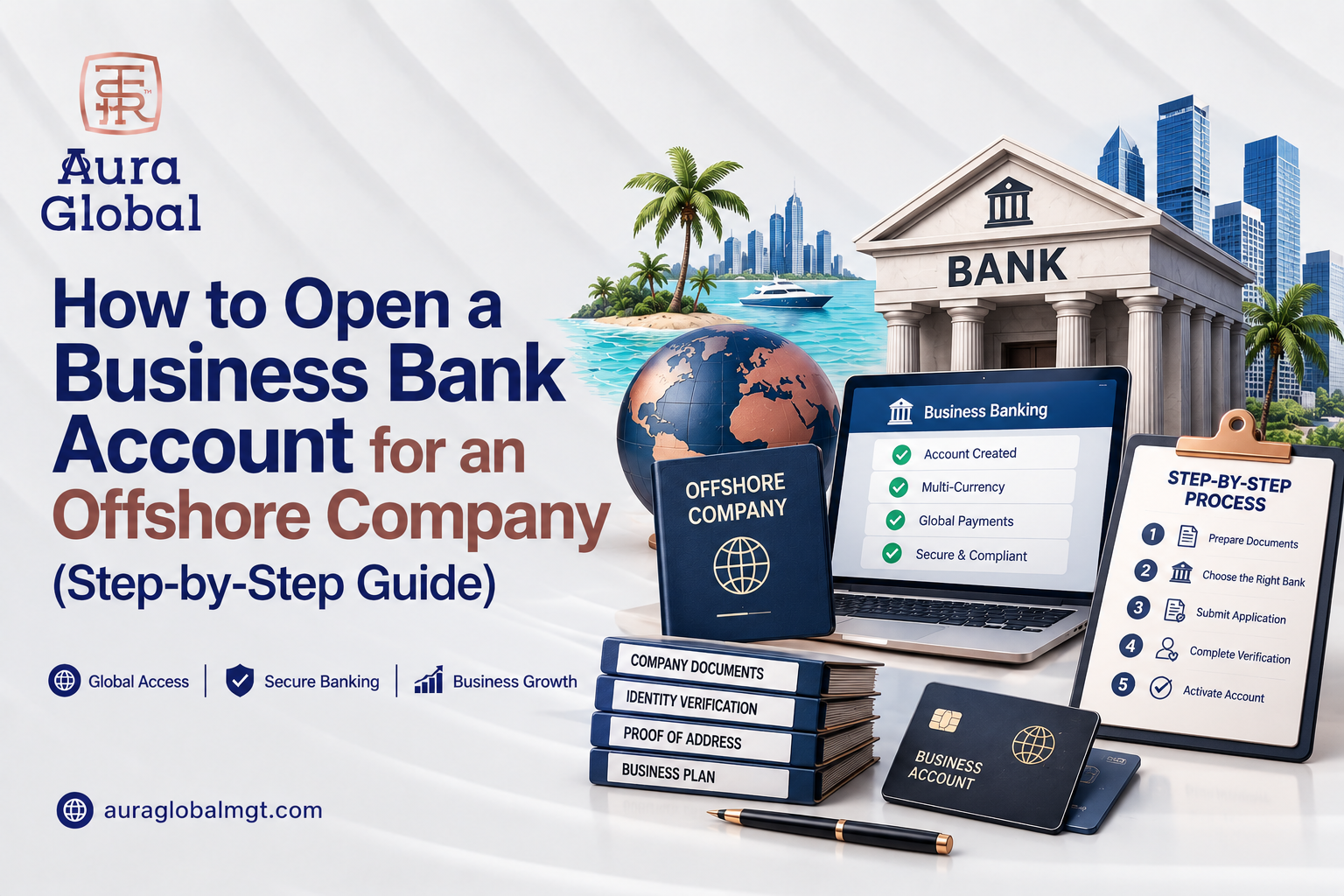
Step 1: Choose Your Offshore Jurisdiction (2-4 weeks)
Not all offshore jurisdictions are created equal. Your choice depends on your industry, client base, and tax strategy.
Top offshore jurisdictions in 2024:
- Mauritius: Excellent for African, Asian, and global operations. Mauritius offshore company setup is streamlined, and banking relationships are strong. The jurisdiction has one of the best DTAA (Double Taxation Avoidance Agreement) networks.
- United Arab Emirates (UAE): Ideal for Middle East operations, tech startups, and trading companies. UAE offshore company setup offers no corporate tax on foreign-sourced income.
- Singapore: Asia’s premier financial hub. Perfect if your offshore company serves Asian markets.
- Indonesia: Growing jurisdiction for ASEAN operations. Increasingly popular among regional entrepreneurs.
- Malaysia: Competitive for logistics, tech, and trading businesses.
Selection criteria to consider:
- Banking relationships and ease of account opening
- Tax treaties with your home country
- Industry-specific regulations
- Client/customer base location
- Regulatory reputation (increasingly important for AML compliance)
Action item: Consult with offshore business consultants or offshore company formation experts before deciding. They’ll assess your specific situation.
Step 2: Complete Your Offshore Company Formation (4-8 weeks)
You cannot open a business bank account without a legally registered company. This is non-negotiable.
Required documentation typically includes:
- Certificate of Incorporation
- Memorandum & Articles of Association
- Director and Shareholder Information
- Company Register Extract
- Tax Registration Certificate
- Certificate of Good Standing (sometimes)
Work with offshore company formation specialists who handle the jurisdiction-specific requirements. They’ll ensure everything meets local regulatory standards and international banking compliance.
This step alone can save months if done incorrectly, so professional guidance is worth the investment.
Step 3: Gather Required Documentation (2-3 weeks)
Banks now operate under strict KYC (Know Your Customer) and AML (Anti-Money Laundering) regulations. Expect comprehensive documentation requests.
Documentation you’ll typically need:
- Corporate documents: Certificate of incorporation, Articles of Association, Board resolutions, Certificate of Good Standing
- Personal identification: Valid passports or IDs for all beneficial owners and directors, recent address proof (utility bill, rental agreement)
- Financial documentation: Bank statements (3-6 months), proof of business funds, audited financial statements (if applicable)
- Business information: Business plan summary, detailed description of operations, customer/supplier information, anticipated transaction volumes
- Tax compliance: Tax ID number, offshore tax planning documentation (if applicable), proof of tax filing in home country
- Beneficial Ownership: Complete disclosure of who ultimately owns/controls the company (critical for FATCA and CRS compliance)
Pro tip: Start gathering these documents even before officially applying. Banks may request additional documents, so having everything ready prevents delays.
Step 4: Select Your Offshore Banking Partner (1-3 weeks)
Not every bank accepts every type of offshore company. Research is crucial.
Where to find suitable banks:
- Your offshore company formation provider often has banking partnerships
- Offshore business consultants maintain relationships with tier-1 banks
- Regional banking associations provide vetted bank listings
- International business directories list banks by jurisdiction
Evaluation criteria:
- Minimum deposit requirements (can range from $5,000 to $100,000+)
- Account opening timelines
- Monthly fees and service charges
- Digital banking capabilities
- Customer service and support for non-residents
- Regulatory standing and deposit insurance
Reality check: Premium banks in jurisdictions like Mauritius or UAE have higher standards but offer better security and services.
Step 5: Submit Your Application (ongoing documentation stage)
Banks increasingly use streamlined online application processes, but expect some back-and-forth.
Standard application process:
- Complete the bank’s application form
- Upload all required documentation through their portal
- Comply with any additional requests within specified timeframes
- Participate in final verification (may include video verification)
- Receive preliminary approval
Timeline: 2-6 weeks depending on documentation completeness and bank efficiency.
Common delays:
- Incomplete documentation (most frequent issue)
- Unclear beneficial ownership structure
- Missing tax compliance documentation
- Insufficient explanation of business purpose
Lesson: Over-documentation is better than under-documentation. If you’re unsure, include it.
Step 6: Account Activation & Initial Setup (1-2 weeks)
Once approved, you’ll receive:
- Account details and credentials
- Debit card (if applicable)
- Wire transfer instructions
- Digital banking access
- Contact information for account manager
Before making your first transaction, confirm:
- Account setup is complete
- All signatories have access (if applicable)
- Transaction limits are understood
- Reporting requirements for your jurisdiction
Expert Tips for Success
1. Start With Compliance, Not Convenience
Banks are strict about AML and FATCA. Ensure every transaction and funding source is clearly documented and legitimate. A single suspicious transaction can trigger account review or closure.
2. Maintain Detailed Records
Keep comprehensive records of all transactions, source of funds, and business purpose. This protects you during any regulatory inquiry and helps with offshore tax planning documentation.
3. Don’t Combine Personal & Business Funds
The entire benefit of offshore company formation disappears if you mix personal and business finances. Keep them absolutely separate.
4. Regular Communication With Your Bank
Inform your bank of significant changes: new beneficial owners, change in business nature, anticipated transaction volume increases. Proactive communication prevents surprises.
5. Work With Tax & Legal Professionals
An offshore company setup involves tax implications. Coordinate with professionals who understand both your home country’s tax obligations and the offshore jurisdiction’s requirements.
6. Choose Stability Over Cost Cutting
Premium banks in Mauritius or UAE cost more but provide stability, security, and better compliance infrastructure. Saving 0.1% in fees isn’t worth account closure risk.
Risks & Considerations
Regulatory Scrutiny: International banking is under constant regulatory pressure. Ensure complete compliance from day one.
Account Closure Risk: Banks may close accounts if they believe compliance standards aren’t met. Non-resident accounts get scrutinized more heavily.
Minimum Balances: Some banks require maintenance balances exceeding initial deposits.
Documentation Changes: Regulations evolve. Stay updated on CRS, FATCA, and local requirements.
Reputational Risk: Operating in less-regulated jurisdictions can affect client perception. Choose well-regarded offshore jurisdictions.
Frequently Asked Questions (FAQ)
Q1: How long does it take to open an offshore business bank account?
A: Typically 6-12 weeks from initial application to account activation. Timeline depends on documentation completeness, bank efficiency, and your chosen jurisdiction. Mauritius and UAE are generally faster than some alternatives.
Q2: What’s the minimum deposit required?
A: It varies significantly. Some banks accept $5,000, while others require $50,000-$100,000+. Premium banking services often have higher minimums but better services.
Q3: Can I open an offshore business bank account if I’m a US citizen?
A: Yes, but with additional compliance requirements (FATCA and FBAR reporting). You’ll need to disclose US citizenship and ensure your banking partner accepts US persons. Many banks have restricted policies for US clients.
Q4: Do I need to visit the bank in person?
A: Not necessarily. Many modern banks handle everything digitally, including video verification. Some jurisdictions and banks still prefer in-person visits for premium accounts.
Q5: What happens if I fail compliance checks?
A: Your application may be rejected, or an approved account could be frozen pending investigation. Non-compliance can result in account closure and potential regulatory consequences. Always disclose complete information.
Q6: Can I have multiple signatories on an offshore business bank account?
A: Yes. Most banks allow multiple authorized signatories. This requires detailed documentation for each signatory and clear authorization structures defined in your company’s governance documents.
Q7: How are my funds protected in an offshore bank?
A: Deposit insurance varies by jurisdiction. Some offer strong guarantees (like UAE’s insurance scheme), while others offer limited coverage. This is an important consideration when choosing your banking jurisdiction.
Conclusion: Your Next Steps
Opening an offshore business bank account isn’t just about moving money internationally—it’s about legitimate business optimization, regulatory compliance, and strategic growth.
The process demands attention to detail, proper documentation, and ideally, guidance from offshore business consultants who understand your specific jurisdiction and industry. Whether you’re setting up an offshore company in Mauritius, UAE, Indonesia, or Malaysia, the fundamentals remain: transparency, compliance, and strategic planning.
Ready to take action?
Define your jurisdiction based on your business location and client base
Engage with offshore company formation specialists early in your planning
Gather documentation while forming your company—don’t wait
Choose your banking partner carefully based on long-term stability, not just cost
Maintain impeccable compliance from day one
The banks and regulatory bodies are watching. Do it right the first time, and your offshore business bank account becomes a powerful asset for international expansion. Cut corners, and you risk account closure and regulatory complications.
Take the first step today. Consult with our offshore business consultants to discuss your specific situation, jurisdiction options, and banking strategy.