Thinking of launching a fintech in Mauritius? Start here
Say you have built an app that lets freelancers get paid across Africa and Asia. It works beautifully. Customers love it. Then someone asks: which licence do you hold?
If your business receives, holds or moves money for other people, you are almost certainly in regulated territory. In Mauritius, that means dealing with the Bank of Mauritius (BoM).
This guide explains how to get a payment services license in Mauritius, what regulators expect, and how to plan your launch without nasty surprises. It is written for beginners and intermediates, so no legal degree required.
How do you set up a payment services business in Mauritius?
Here is the short version:
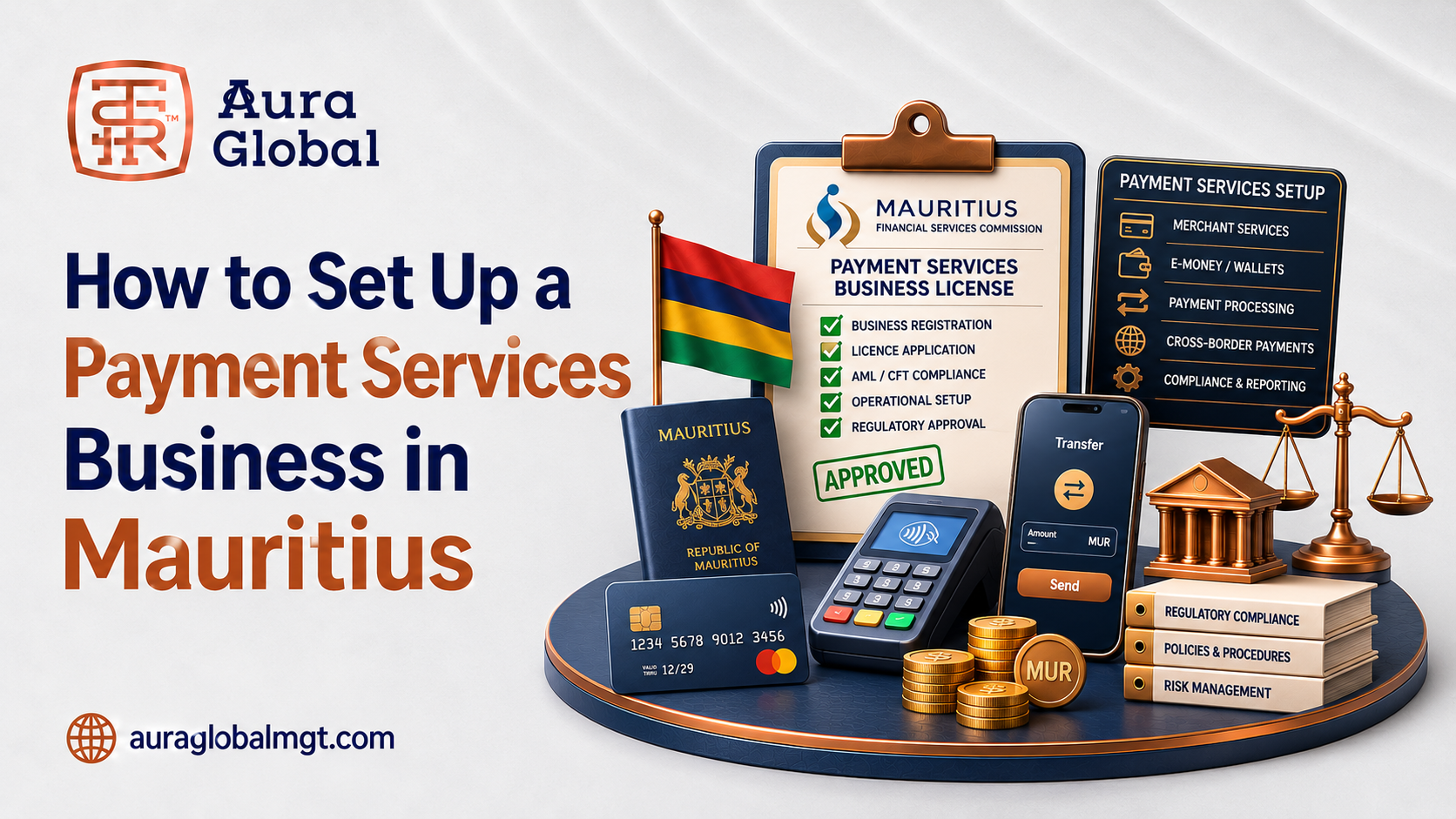
- Incorporate a company (the regulations speak of a “body corporate”)
- Identify exactly which payment services you will offer
- Prepare a business plan, financial projections and governance structure
- Show sufficient financial resources and a sound capital structure
- Prove that directors and senior officers are fit and proper
- Put in place AML/CFT, IT security and customer money safeguarding controls
- Apply to the Bank of Mauritius for a Payment Service Provider licence
Requirements can change, so always verify against the latest BoM publications.
What is a payment services business?
A payment services business helps customers move money. That can include executing transfers, direct debits, card payment transactions, remittances, acquiring merchant payments, issuing payment instruments or offering account information services. Wallets and prepaid products may involve electronic money.
In Mauritius, these activities fall under the National Payment Systems Act 2018, which designates the Bank of Mauritius as the main authority for regulating, overseeing and supervising payment systems. The detailed licensing rules sit in the National Payment Systems (Authorisation and Licensing) Regulations 2021, effective from 1 June 2021.
The regime has continued to evolve. The Act has been amended since 2018, including recent changes that, among other things, added a definition for account information services.
Who regulates payment services in Mauritius?
The Bank of Mauritius is the lead regulator. It licenses payment service providers, authorises operators of payment, clearing and settlement systems, and supervises them on an ongoing basis.
The Financial Services Commission (FSC) oversees other non-bank financial services, and some fintech or digital asset activities may involve both authorities. If your model mixes payments with investments, lending or virtual assets, get advice early, because you may need more than one licence.
How the licensing process works
The BoM looks at whether your business is safe, well governed and financially sound. Under the 2021 Regulations, an applicant must show, among other things, that:
- Its directors and officers have the required technical knowledge and experience and are fit and proper
- It has sufficient financial resources and an adequate capital structure
- It can operate the service securely and reliably
A licence is also tied to specific services. A payment service provider cannot offer services beyond those listed in its licence. If you add a new product later, expect to apply to amend your licence. BoM public notices show this in practice: existing licensees have had their licences amended to add new payment services.
If you want to issue electronic money or manage stored-value accounts, additional conditions apply.
Why get licensed? The benefits
- Legal certainty. You can operate openly without risking enforcement action.
- Customer and partner trust. Banks, card schemes and merchants prefer licensed partners.
- Banking relationships. Licensed firms find it easier to open and maintain accounts.
- Growth path. A licence lets you expand services over time through amendments.
- Credibility for investors. A regulated structure signals discipline.
The risks and challenges to plan for
Be realistic about the hurdles:
- Capital and cost. Capital requirements, compliance staff, audits and technology all cost money. Figures published by advisers vary, so confirm minimum capital directly with the BoM.
- Safeguarding obligations. You must protect customer money, typically by segregating it from your own funds.
- Heavy compliance. AML/CFT duties, reporting and governance are continuous, not one-off.
- Timelines. Regulators may ask follow-up questions, so build time into your launch plan.
- Scope limits. You can only provide the services your licence permits.
Core regulatory requirements
1. A proper legal entity
The applicant must be a body corporate. Choose a structure that matches your plans, and get advice on tax and substance before incorporating.
2. Fit and proper management
Directors, shareholders and key officers should have the experience, integrity and track record the BoM expects. Expect background checks.
3. Financial resources
Show that you have enough capital, and a plan to keep it. A convincing financial model with realistic projections matters here.
4. Customer funds safeguarding
If you hold customer money, you need clear arrangements for segregation, reconciliation and protection in case of insolvency.
5. AML/CFT compliance
Payments businesses are high-risk for money laundering, so regulators expect a risk assessment, customer due diligence, transaction monitoring, a designated compliance officer and staff training.
6. IT security and operational resilience
Expect questions about system security, data protection, outsourcing, business continuity and incident response.
7. Governance and reporting
Once licensed, you must submit reports, annual compliance information and notify the BoM of material changes.
Documents you will typically prepare
- Application form and fee
- Certificate of incorporation and constitutive documents
- Detailed business plan and product description
- Three-year financial projections
- Shareholder and ultimate beneficial owner information
- CVs, declarations and background checks for directors and key officers
- AML/CFT manual and risk assessment
- Safeguarding and reconciliation procedures
- IT architecture, cybersecurity and business continuity plans
- Outsourcing agreements and customer terms and conditions
The BoM sets the exact list in its application guidance, so always check the current form.
Step-by-step: how to get your payment services licence
- Define your model. Write down every service you plan to offer and how money will flow.
- Check which licence applies. Confirm whether you need a PSP licence, an authorisation as a system operator, or an e-money component.
- Choose your structure. Incorporate and plan your ownership and governance.
- Assemble your team. Recruit a compliance officer, a risk lead and experienced directors.
- Build your policies. Draft AML, safeguarding, IT and complaints policies that fit your actual product.
- Prepare financials. Build a realistic budget and show capital adequacy.
- Engage with the BoM. Submit a complete application and respond promptly to questions.
- Set up banking and technology. Arrange safeguarding accounts and test your systems.
- Launch and report. Go live only when licensed, then follow your reporting calendar.
Expert tips
- Start with a narrow scope. A focused licence is easier to get. You can amend later.
- Do not copy templates blindly. Regulators spot generic policies quickly.
- Explain the money flow clearly. A simple diagram saves many questions.
- Invest in compliance early. Retrofitting is costlier than building in from day one.
- Talk to banks in parallel. Banking can take as long as licensing.
- Keep records of everything. Applications, answers and decisions should be easy to retrieve.
Common mistakes
- Launching before the licence is granted
- Describing the business vaguely
- Underestimating safeguarding and AML duties
- Adding new services without amending the licence
- Assuming advisers’ fee estimates are final
Frequently asked questions
Which authority issues payment services licences in Mauritius?
The Bank of Mauritius issues licences for payment service providers and authorises payment, clearing and settlement system operators under the National Payment Systems Act 2018. Some adjacent activities, such as investment or digital asset services, may also need approval from the Financial Services Commission.
What law governs payment services in Mauritius?
The National Payment Systems Act 2018 is the main law, supported by the National Payment Systems (Authorisation and Licensing) Regulations 2021. The BoM may issue further guidelines, and the Act has been amended since 2018, so check the latest consolidated version.
Can a foreign company apply for a payment licence?
The regulations refer to applicants as bodies corporate, and the BoM assesses substance, governance and fitness of the management. Foreign-owned structures can be considered, but you should expect to demonstrate a genuine local presence. Seek advice on structure before applying.
How long does it take to get licensed?
Timelines depend on how complete your application is and how quickly you respond to BoM questions. Weak documentation causes delays. A realistic plan allows several months for preparation, review and setting up banking and systems.
Do I need separate licences for each payment service?
A licence lists specific services, and a provider cannot offer services outside it. If you add services later, you generally need to amend your licence. Electronic money issuance carries extra conditions, so plan your product roadmap before applying.
How much capital do I need?
Minimum capital depends on the type of licence and your business model. Adviser publications quote different figures, so do not rely on them alone. Ask the BoM or a qualified adviser for the current requirement for your exact services.
Conclusion: build compliance into your product
Getting a payment services license in Mauritius is demanding, but it is manageable when you plan properly. Define your services, prepare strong governance and safeguarding, and treat the regulator as a partner rather than an obstacle.
Ready to move forward? Aura Global Management supports fintech founders with structuring, licensing preparation and ongoing compliance in Mauritius. Talk to our team to map out your launch.